

Why Feed Conversion Rate (FCR) Matters Economically in Poultry Production!

Most poultry losses do not come from the market — they come from the feed trough.
Feed accounts for 60–70% of total poultry production costs, meaning that even small inefficiencies can quickly translate into major financial losses. One of the most important indicators of feed efficiency is the Feed Conversion Rate (FCR).
In poultry production, FCR measures how efficiently birds convert feed into body weight or eggs. The lower the FCR, the less feed is required to produce the same output.
From an economic perspective, FCR has a direct impact on profitability. Even a small improvement can lead to substantial savings at scale. For example, improving FCR from 1.8 to 1.7 in a commercial flock can save significant quantities of feed, directly increasing net returns per bird.
FCR also affects competitiveness. Farms with better feed efficiency can sell their products at more competitive prices while still remaining profitable. On the other hand, poor FCR becomes especially costly when feed prices rise.
Beyond direct costs, efficient FCR improves resource use by reducing grain consumption and overall feed demand. It also reduces waste output, helping farms manage manure-related costs and environmental risks more effectively.
Ultimately, maintaining a good FCR improves business resilience. During periods of feed price volatility, producers with efficient feed conversion are better positioned to absorb cost shocks and protect profit margins.
In summary: A lower FCR means lower production costs, higher profitability, and improved long-term sustainability.
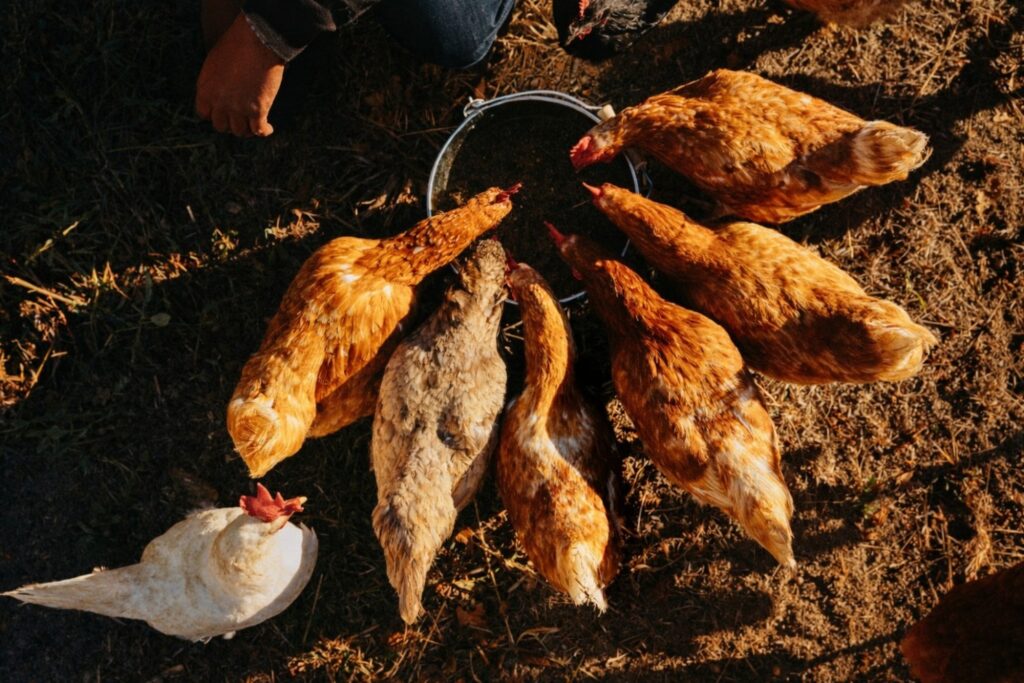
In poultry production, feed efficiency is not just a technical measure — it is a critical economic decision.
How closely do you track FCR in your operation, and where do you see the biggest opportunities for improvement?